Oil Drain Intervals on the Rise
The 3000-mile oil change interval has been ingrained in the American consciousness for decades.Conventional motor oil companies aggressively push it, oil change centers remind their customers to return when another 3000 miles have accumulated on the odometer and fathers teach their children to change their oil and filter according to a 3000-mile schedule. Vehicle ManufacturersVehicle manufacturers, on the other hand, aren’t quite on the same page. A look at many recent-model owners manuals reveals a recommended 5000- to 7500-mile oil drain interval, while European vehicle manufacturers recommend even longer drain intervals. As the service lives of spark plugs and transmission fluids have increased, consumers have demanded longer service intervals for motor oil as well. The introduction of electronic oil life monitors on modern vehicles is beginning to push drain intervals upward. Oil life monitors typically determine when oil should be changed based on engine operating conditions such as temperature, revolutions and speed.
Almost all 2005 and later General Motors vehicles are equipped with its Oil Life System, which makes use of a color-coded system to alert the driver when it’s time to change the oil. A “yellow” condition indicates that it’s time to think about changing the oil, while a “red” condition indicates that the oil is past its service life. According to GM, the typical drain interval for vehicles equipped with the Oil Life System is 8,500 miles, which will result in a savings of 6.6 million gallons of oil and $145 million for 2005 model-year drivers over the lives of their vehicles.
General Motors is actively seeking to extend oil drain intervals even further. In fact, the company recently asserted that 20,000-mile oil drain intervals are possible with existing engine technology and synthetic oils meeting current specifications, while 30,000-mile oil change intervals are achievable with appropriate motor oil quality and minor engine modifications.
“Drain intervals are a very specific goal for GM, and are being managed in a logical and planned fashion,” says James A Spearot, director of GM’s Chemical & Environmental Sciences Laboratory in Warren, Mich. “Longer drain intervals are desirable to meet customer demands for reduced maintenance and convenience, and for the environmental benefits that come with less oil handling. And, in the end, longer drain intervals will help us with our warranty protection goals.” Motor Oil CompaniesAMSOIL represented the lone voice for extended drain intervals in America for over 30 years, recommending 25,000-mile/one-year drain intervals. While extended oil drain intervals have been common in Europe for years, other American motor oil companies have mostly avoided recommending them, preferring instead to stick with 3000-mile recommended intervals despite the contrasting recommendations of vehicle manufacturers and European motor oil companies.
In fact, Marc Graham, president of Pennzoil-Quaker State-owned Jiffy Lube International, was quoted in a 2001 Lubricants World interview as saying, “At [PQS] we use a number internally that if we [shortened the drain interval] by 100 miles [for each car serviced], it would mean an additional $20 million in revenue for the company.” He also explained that “if we could move our customers to get one more oil change per year, it’s worth $294 million for the oil change alone and $441 million in revenue, when you include the ancillary products and services customers typically buy along with the oil change.”
Today, with vehicle manufacturers recommending longer and longer drain intervals and the increasing use of oil monitoring systems, the practice of extending drain intervals has become more mainstream and forced more motor oil companies to take notice. ExxonMobil, for example, recently introduced a line of long drain motor oils, and other motor oil companies will likely follow. As more motor oil companies begin offering extended drain motor oils, the extended drain interval idea pioneered by AMSOIL 34 years ago will become increasingly common.
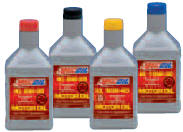
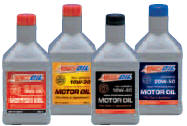
According to a special report released last May by the Motor & Equipment Manufacturers Association (MEMA), synthetic motor oils are key to extended drain technology: “Extended drain technology is primarily based on the availability of synthetic oils. While the additives in conventional, non-synthetic oils allow them to function longer than the traditional 3,000 miles, it is primarily the synthetic base stocks that allow the oil to last much longer. Synthetic oil offers many advantages in durability versus conventional petroleum oil and it is all based on the synthetic oil’s superior heat and oxidation resistance. Synthetic oil is more accurately controlled at the molecular level and therefore can be engineered to resist the forces in an engine that work against oil durability.” AMSOIL offers a complete line of premium quality synthetic motor oils formulated for extended drain intervals.XL Synthetic Motor Oils
Synthetic Motor Oils
Series 2000 0W-30 Synthetic Motor Oil
See the AMSOIL Motor Oil Products. |
|
Copyright 2012 Oil Derek Distributing |